Data Center Growth

- Posted in The Environment/Climate Change by

enter image description here


Music bed Welcome to another turn of The Sonic Wheel I’m Christopher Howell Music bed down

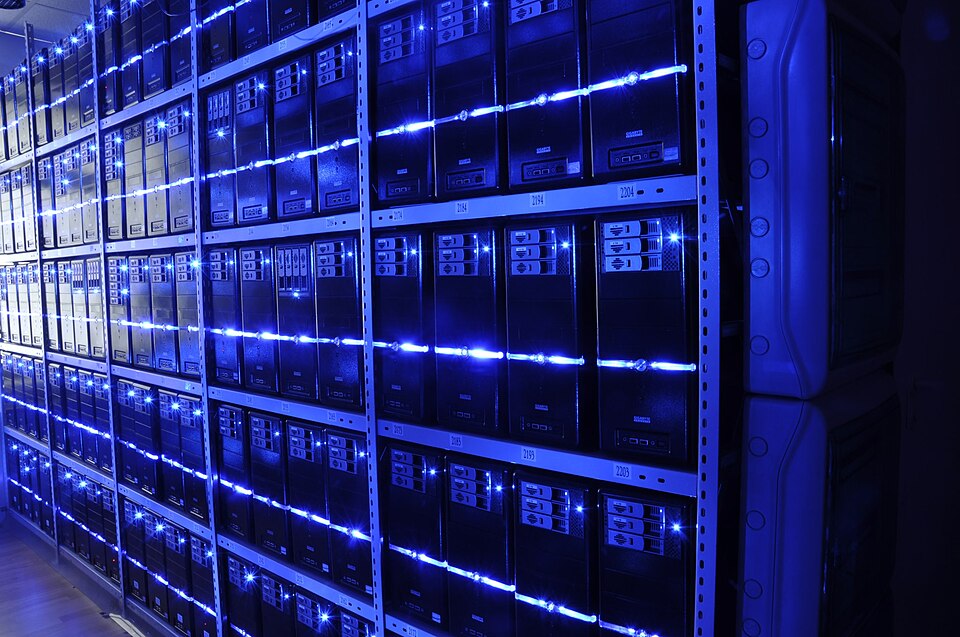
Data centers have stirred a lot of discussion and controversy lately. Let’s take a look at the science behind the controversy. A data center is collection of servers located in one building. A server is a computer, not too different then a desktop computer you might have at home or at work. It runs a set of software to perform different jobs. A web server serves you web pages you ask for. A mail server shows you what’s in your email inbox. As you know, a computer uses electricity and generates heat.

Enterprise data centers tend to be smaller. A bank might have a data center in the basement. You use it when you do online banking. Edge data centers are placed closer to it’s users to provide quick service. Netflix needs edge data centers to quickly provide movies on demand. Co-location data centers have a mix of different servers and clients all doing different work. My website is in a co-location web data center.

Hyperscale data centers are the largest. They are in huge warehouse-like buildings of 100 thousand square feet or more covering acres of land. They contain thousands of servers and use electric power exceeding 100 megawatts. Hyperscale data centers can use more electricity then small cities and demand millions of gallons of water a day for cooling. The massive electric and water use have an environmental impact. After they’re up and running they require a small number of workers so there seems to be no long term employment advantage for the community. The recent growth of these hyperscale data centers is fueled by the boom in Artificial Intelligence or AI by companies like Meta, Amazon, Google, OpenAI and Anthropic.

Hyperscale data centers have a big impact on local power grids and electricity prices. Boston University electrical and computer engineering professor Ayse Coskun (eye-zea jush-kun) researches data center power management and data center power grid interactions. Professor Jush-kun (Coskun) says new electrical infrastructure costs money and who pays could effect your electric bill.

(cut 1) So when a hyperscale data center connects to the grid, utilities may need new substations, new infrastructure, transmission lines that deliver the power may require upgrades. Interconnection studies of these data centers could take years potentially, and our electrical grid originally was not designed for rapid additions of single customers at this scale. So typically, if 100 megawatt, 200 megawatts of power is coming up, it comes at various locations in a city, not all in one location. So that’s the big difference. On electricity prices, the impact of a data center being built depends on several factors. Who pays for the infrastructure upgrades? How constrained the local power grid already is and whether the data center operates in the traditional more rigid form or is it adopting any flexibility measures by shifting or reducing its power when needed. If upgrade costs are shared broadly across all the ratepayers, then residential customers may see higher bills and we saw some examples of this in the recent years. If developers cover most of the infrastructure costs and facility also operates flexibly, meaning, again, it can change its power during high demand periods and the like, then the pricing impact can be more limited. There are also reliabilty implications potentially. Large facilities can increase the peak demand stress on the grid and it can increase congestion in an already constrained area of the power grid. So this is one option, but they can also become part of a better and more resilient solution. For instance, in data centers, there’s a lot of discussion in various power grid regions in the U.S. If data centers are designed as flexible loads, meaning they can temporarily reduce or shift their electric use during grid stress times, then they can support more stability. They can help avoid rapid infrastructure upgrades, and these upgrades can be planned and done over a longer period of time, they can also help with more renewable energy integration, which also takes time.

That was Boston University professor (eye-zea jush-kun) Ayse Coskun. Professor Coskun says greenhouse gas emissions from a data center depends on how local energy is generated.

(Cut 2 ) So electricity itself is not inherently clean or dirty. It depends on how it is generated. If a data center operates in a region heavily dependent on coal or natural gas, then higher electricity demand can increase fossil fuel generation and emissions as a consequence. If the data center is in a region with abundant wind, solar, hydro, nuclear power, then the emissions impact might be much lower. Timing also matters. It’s not the generation, but also the timing of the generation and the usage of electricity. So many companies, many tech companies, for instance, purchase renewable energy credits or sign long term power purchase agreements with wind or solar firms, and that helps on an annual accounting basis of that company. But the specific climate impact depends on when the electricity is consumed. For example, if AI workloads at a data center are running at times when fossil generation dominates, such as in the evenings, even if that company buys renewables elsewhere, emissions of that region can still be high. This is why there’s growing discussion around doing computing in a carbon aware way or matching electricity use to renewable availability for data centers. Renewables absolutely have some place in this conversation, but integration is key. Renewable energy is variable, solar, wind, they change on a daily or seasonal basis. So AI data centers can actually help by shifting workloads to times of high renewable generation by using energy storage and coordinating with grid operators as opposed to just being a passive rigid consumer. So without improvements in efficiency, flexibility, and clean energy integration, then rapid AI growth could increase regional emissions. But with the right policies and design choices, data centers can also accelerate renewable deployment and help modernize the grid. AI growth and climate policy are now in a way interconnected. How we design these facilities today will influence emission trajectories for possibly four decades.

That was Boston University professor (eye-zea jush-kun) Ayse Coskun.

University of California Professor Shaolei Ren (shaow-lay ren) researches data center energy management, power systems, and the community impacts of data centers. Hyperscale data centers can use millions of gallons of water a day, much of that for cooling. Professor Ren says data center water usage varies. They could use a lot of water during the summer but less during the rest of the year.

(Cut 3) So I think for the communities or individual towns, the most important metrics is the direct water usage. And if you look at some data center systems, they may not use a lot of water. Their total annual water usage number could be pretty low. The most important metric that is not disclosed in those annual number is the peak water demand. Just like when we design the power grid, we have to make sure at anytime during the summer or the winter storm, the power grid is able to supply the electricity to all the demand, but water is the same. Water system has to be designed to meet all the water demand during the summertime and also at all pressure zones. And in many communities, the public water system do not have the available capacity to accommodate the new industry scale demand from data centers. So some data center, they could be using very low annual amount of water, but their water usage is concentrated around a couple of weeks a year. And that means during the summertime, they’re using really high amount of water and in the order of like million gallons per day, and they don’t use water for the rest of the year. So that’s why you see a really low number, which is really misleading and misinforming the public discussion. So these millions of gallons of water capacity requests from the local water infrastructure is really straining the system. And in many cases, the communities don’t have that much water available to support the demand.

That was University of California Professor (shaow-lay ren) Shaolei Ren. Hyperscale data centers require a lot of energy. Some are constructing their own electrical generation plants on site. They also require backup diesel-powered generators. This contributes to unhealthy emissions. Professor Ren says a study revealed that the heath impact of those emissions could run between 10 to 20 billion dollars.

(Cut 4) And these generators are mostly powered by diesel, and this can pollute the air releasing large amount of nitrogen oxides, PM 2.5, those are fine particles that can penetrate deeply into people’s lungs and create immediate health outcomes like asthma, a heart attack, even premature death. So we did some study using the EPA’s modeling tool, showing that as of the end of 2024, if these generators release just 10% of the permitted amount, the total annual health impact is roughly 200 to $300 per year. And nowadays we’re seeing a lot more diesel generators installed. So the health outcome could be much higher than our earlier estimate. And this is just a direct impact. And data center are also using electricity, and some of the electricity grid is not that clean. They’re releasing carbon, but they are also releasing air pollutants like those PM 2.5 or nitrogen oxides. In the U.S., despite years of progress, the power plants is still a leading source of air pollutants, and this can harm people’s health, especially for the communities living next to those power plants. And the elevated health risk of living next to some power plants is very well documented. And also these air polluters are not just limited by the county line. They can travel hundreds of miles along with the wind. So overall, we had a study to show that in 2028, the US data center health impact in total, including the backup generators and also the electricity usage, it could be roughly $10-20 billion. At the national level, it’s probably modest. It’s not that high, but most of the impact is concentrated around those communities living next to data centers or living next to power plants. Nowadays, we’re seeing a lot of data centers are building their own power plants outside. So essentially, this is turning the data center campus into a power plant. In most cases just fossil fuel power plants.

That was University of California Professor (shaow-lay ren) Shaolei Ren.

The controversy over data centers could be all for nothing. The guy doing the smartest reporting on data center financing is EZ Primary Research CEO Ed Zitron. He argues data center financing is built on a house of cards. It’s costing trillions of dollars to build data centers. They may never be able to pay those loans. By 2030 many data centers won’t get built and the shell companies financing them will be bankrupt. The dollar figures are so large that the resulting economic collapse will probably dwarf the 2008 recession. AI is the only product that costs more to produce then customers will pay and the more customers use it, the more it costs to produce.

Journalist and writer Cory Doctorow reminds us that we still don’t know if AI can do what it’s boosters say it can do, Quote - Unless there’s some way to estimate how much money we have to give to AI companies before they cure cancer, we should at least consider the possibility that the true sum is “more money than exists now and that will ever exist.” We should also consider that whatever benefits to cancer research that AI might deliver could come with a higher price-tag than the promising cancer research we’re dropping because we can’t find far more modest sums. – end quote.

To learn more about data center financing search for Ed Zitron on YouTube.

Music bed up That’s it for this spin of The Sonic Wheel Thanks for listening. I’m Christopher Howell Music bed down


Credits

Music by Radio Direct

Logo by Snehanshu Dharmadhikari on Unsplash

Thanks to SciLine, a non-profit based at the American Association for the advancement of Science for production assistance. Learn more at https://www.sciline.org/about/

https://bookshop.org/p/books/the-reverse-centaur-s-guide-to-life-after-ai-how-to-think-about-artificial-intelligence-before-it-s-too-late-cory-doctorow/ac86987834ee96c2

https://pluralistic.net/2025/12/05/pop-that-bubble/#u-washingtonhere -

https://www.wheresyoured.at/the-subprime-data-center-crisis/

BalticServers.com, CC BY-SA 3.0 https://creativecommons.org/licenses/by-sa/3.0, via Wikimedia Commons

Cyclospora Outbreak and Food Safety

- Posted in Healthcare by

Cyclospora Outbreak Episode 006


enter image description here

Music bed

Welcome to another turn of The Sonic Wheel

I’m Christopher Howell

Music bed down

An outbreak of cyclosporiasis is making people sick. As of July 28th the illness has spread to 45 states. Cyclosporiasis is caused by a parasite called cyclospora. There are between 500 and 1000 confirmed cases in Ohio. According to reporting by the Center for Disease Control there have been more than 67-hundred cases since May First. Many cases are traced back to iceberg lettuce grown by Taylor Farms coming from Mexico. Tracing of the sources and the spread of the outbreak is ongoing with cases sure to increase. It’s sent 423 people to the hospital but so far no deaths are reported.

Professor in the Department of Animal and Food Sciences at the University of Delaware, Dr. Kalmia Kniel has worked in microbial food safety, focused on protozoan parasites and foodborne pathogens for about 25 years. Dr. Kniel describes what makes fresh produce, like lettuce, especially susceptible to contamination...

( cut 1 ………)

That was Dr. Kalmia Kniel. There is a lag between the time food contamination occurs and when it’s detected. Sometimes food producers can detect contamination ahead of time through testing or monitoring. Dr Kniel says unfortunately it often takes people showing up in clinics before public health authorities can identify the causes of food contamination.

(cut 2 ………..)

Dr. Kniel says more monitoring of food safety practices like hand washing and sanitary handling of food in restaurants, stores, and by producers has been successful in making our food safer.

Epidemiologist and Professor in the Division of Environmental Health Sciences at the University of Minnesota, Dr. Craig Hedberg has spent much of his career investigating outbreaks and training others on better investigative techniques. He says Epidemiology is basic detective work that starts with talking to people to find out what made them sick...

(cut 3 ……)

That was Dr. Craig Hedberg. Because outbreak detection requires people, increased funding and hiring more people to do the investigations could make the process of finding contaminated food quicker.

Dr. Hedberg...

(cut 4 …..)

That was Dr. Craig Hedberg. The CDC is publishing new cyclosporiasis outbreak data weekly on it’s website As the outbreak continues, Dr. Kniel reminds us to remember this investigation is changing as new information becomes available.

(cut 5….)

Symptoms of cyclosporiasis include diarrhea, vomiting, loss of appetite, tiredness, and fever. To date no one has died from this infection. Those at higher risk include pregnant women, the elderly and those with compromised immune systems. Many people are treating it at home with rest and lots of fluids. Health experts say if you have severe symptoms you can seek treatment at a clinic or emergency room and antibiotics may help.

Music bed up

That’s it for this spin of The Sonic Wheel

My thanks to SciLine, a non-profit based at the American Association for the Advancement of Science for production assistance.

Thanks for listening.

I’m Christopher Howell

Music bed down


Credits

Music by Radio Direct

Logo by Snehanshu Dharmadhikari on Unsplash

Thanks to SciLine, a non-profit based at the American Association for the advancement of Science for production assistance. Learn more at https://www.sciline.org/about/

Professor in the Department of Animal and Food Sciences at the University of Delaware, Dr. Kalmia Kniel works in microbial food safety, focused on protozoan parasites and food bourne pathogens for about 25 years.

Epidemiologist and Professor in the Division of Environmental Health Sciences at the University of Minnesota, Dr. Craig Hedberg has spent much of his career investigating outbreaks and training others on better investigative techniques.

https://www.cdc.gov/cyclosporiasis/php/surveillance/index.html

https://www.hopkinsmedicine.org/health/expert-qa/cyclosporiasis-outbreak

Keep Me In Your Heart

- Posted in Personal by

enter image description here

Music bed

Welcome to another turn of The Sonic Wheel

I’m Christopher Howell

Music bed down

At the time my late wife, Charlotte and I met in 1989 I was struggling to find a path in the world. Charlotte was kind and smart and beautiful and I thought she might help steady me and help me get headed in the right direction.

When you're first dating someone you learn a lot about them. You learn about their family, their friends, their job and the kind of music they like. Charlotte was six years younger then me and liked a lot of punk and new wave from the late 70 and early 80s. My musical tastes skewed older. There was a lot of overlap in what we both enjoyed, especially The Rolling Stones, The Who, The Kinks, and The Small Faces.

We both liked singer-songwriter Warren Zevon. I was really happy to find out she liked him. Warren Zevon’s biggest hit was 1978’s quirky “Werewolves of London”.  Some people dislike his songs because of his sometimes dark and strange lyrics but Charlotte and I instantly bonded over our love for his music. We have 5 CDs of his studio recordings and two anthology box sets. Maybe not everything he recorded but a lot.

Throughout the 1990s Zevon appeared numerous times on David Letterman’s show, even sitting in as bandleader once when Paul Shaffer was away on a movie shoot. Every time Zevon was on, we were sure to tune in.

On November 8, 2025 Letterman inducted Zevon into the Rock and Roll Hall of Fame.

[cut from Letterman Hall of Fame induction]

That was from David Letterman’s speech inducting Warren Zevon in to the Rock and Roll Hall of Fame.

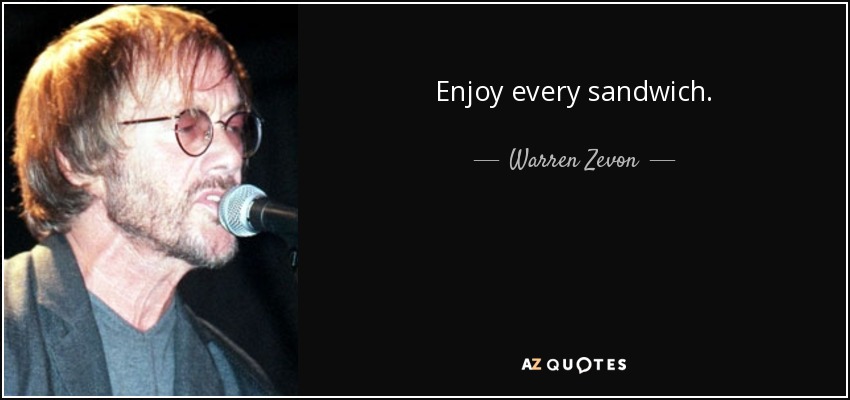
In August 2002 Zevon was diagnosed with pleural mesothelioma, an inoperable form of lung cancer. Charlotte and I were watching Letterman on October 30, 2002 when Zevon talked about his cancer diagnosis in an emotional and poignant last appearance. He said, “I might have made a tactical error in not going to a physician for 20 years. It was one of those phobias that really didn’t pay off.”  Zevon said after getting a terminal cancer diagnosis he put more value on the small pleasures of life. He uttered what has become a legendary statement.

[Cut from Late Night – sandwich]

That was from Warren Zevon’s last appearance on David Letterman’s Late Show in 2002.

Charlotte didn't have a phobia of doctors. She just didn’t like going to the doctor. I don’t know why. She would go to the doctor when she absolutely needed to but would avoid it if she could. It was a painful and repulsive coincidence that both Warren Zevon and Charlotte would both learn too late they were dying of cancer.

Upon learning of his cancer diagnosis, Zevon became determined to record a final album. He recorded The Wind, with guest stars Bruce Springsteen, Tom Petty, Don Henley, Ry Cooder, Dwight Yoakam, Jackson Browne, Emmylou Harris, Joe Walsh and many others. The album was released on August 26, 2003, just two weeks before his death.

The Wind won a 2004 Grammy Award for Best Contemporary Folk Album and a Grammy for Best Rock Vocal Performance for the song  "Disorder In The House".

The song "Keep Me In Your Heart" from the album was the last song Zevon recorded and was nominated for song of the year.

[a few seconds of Keep Me in Your Heart]

Keep Me In Your Heart was the only song Charlotte specifically requested to be played at her funeral.

I’m keeping both Charlotte and Warren Zevon in my heart today and everyday. 

Music bed up

That’s it for this spin of The Sonic Wheel

Thanks for listening.

I’m Christopher Howell

Music bed down


Credits

Intro/outro music by Radio Direct

Logo by Snehanshu Dharmadhikari on Unsplash

David Letterman Inducts Warren Zevon into Rock & Roll Hall of Fame | Rock Hall 2025 Induction - https://youtu.be/CYYzqt68dnE?si=uZp2bMw_P5e9jBKv

Warren Zevon's Final "Late Show" Appearance | Letterman - https://youtu.be/giTi8KWSZl4?si=UaUnVQ9huWX7AwSt

Clip of the song Keep Me In Your Heart For a While, Written by Warren Zevon and Jorge Calderon. Copyright Zevon Music (BMI) 2003 from the album The Wind.

Header photo from AZ Quotes, https://www.azquotes.com/quote/324800

Fundraising PSYOPS

- Posted in Radio by

enter image description here

Music bed

Welcome to another turn of The Sonic Wheel

I’m Christopher Howell

Music bed down

After working as a part-time board operator for a number of years, I was hired as a full-time producer of fundraising spots and to help produce the on-air fundraising campaigns for public radio station 90.7 WMFE-FM in Orlando. I would produce 30 or 60 second audio spots to air during or outside of fundraising time to convince listeners to become subscribing members of the station. I was actually one of the first full-time, dedicated, public radio fundraising producers in the nation.

Let’s take a walk down memory lane and listen to some of my best productions from that era. At the time, 90.7 was a news and classical music combo. Monday through Friday we aired NPR’s Morning Edition from 6am to 9am. Locally hosted classical music from 9am to 4 pm. Then All Things Considered and Marketplace from 4 to 7. At 7pm there was recorded classical music all night until the next morning.

Here’s a short spot that aired around news programming in the two weeks or so leading up to the fund drive. The aim of the spot was to thank listeners and to plant a seed to get them ready to give when the drive began.

insert softening 07.wav audio here

That was a fundraising spot I produced for 90.7 WMFE.

If you’re a NPR listener, during the middle part of the day, you’ll hear Lakshmi Singh present the top of the hour national newscasts. In the late 1990s Lakshmi was a reporter for 90.7. We recorded a number of spots for a very early morning BBC News show called “World Update”. Here’s an example of a pre-recorded fundraising spot that aired during World Update before staff could come in and start pitching live.

insert singh-howell world update pitch 02.wav audio here

That was a fundraising spot I produced from the BBC news program “World Update”. Lakshmi Singh has the purest announcer’s voice I’ve ever heard. It’s like listening to a violin.

I reviewed a number of the spots I produced for this episode. I was amazed at the sheer volume of audio I produced from 1995 to 1998. There must be more then 100 fundraising spots. Thank you gift spots for mugs, tee shirts, unbrellas, weekend getaways and the public radio staple – the tote bag.

Over the years I was involved in pledge drives that brought in hundreds of thousands of dollars. It wasn’t often we didn’t meet or exceed our goals. That success was a team effort. I worked with a group of incredible people who were dedicated to the mission of public broadcasting. To be a trusted member of the community. To be fair, accurate, entertaining and transparent. To provide unique programming not found on commercial outlets.

It was so much fun. I’m proud of all the work I’ve done for public radio.

Music bed up

That’s it for this spin of The Sonic Wheel

Thanks for listening

I’m Christopher Howell

Music bed down


Credits

Music by Radio Direct

Logo by Snehanshu Dharmadhikari on Unsplash

Header photo by Chris!

Journalism Code of Ethics

- Posted in Journalism by

enter image description here

Music bed

Welcome to another turn of The Sonic Wheel

I’m Christopher Howell

Music bed down

An October 2025 poll by Gallop found that confidence in the mass media is historically low. Only 28 percent of Americans have a great deal or fair amount of confidence in newspapers, radio or TV to report the news fully, accurately or fairly. Republicans polled had much lower confidence in media then democrats and younger people were less trusting then older people. A Pew Research Center survey from last October had similar findings.

There’s a lot reasons for this. The internet has become an outrage machine where the biggest untruth is shared widely while any correction comes too late and gets buried in the weeds. Unscrupulous people and groups now claim they’re journalists. Politicians, while never truly trustworthy, tell the most outrageous and easily provable lies with impunity. AI let’s anyone with no technical skill spin up a fiction complete with supporting and convincing photographs. The prime motivation of for-profit news outlets is to no longer serve their audiences with trustworthy news. And maybe people today are just more partisan and more skeptical. Misinformation and disinformation is everywhere.

Trust is a the coin of the realm to an ethical media organization. Every good newspaper, TV newsroom, radio news station and now podcast or internet news outlet has a code of ethics that is strictly enforced. Strictly enforced. The Society of Professional Journalists (or SPJ) has a code of ethics that is followed by many news organizations or it’s used as a template to form custom ethics codes to serve an outlet’s specific needs.

I’ve read a number of ethics codes but I’m really fond of this list of five core principals of ethical journalism from the Ethical Journalism Network based in England. Here’s Honorary President and former Director Aidan White --

(Cut from Aidan White)

That was Honorary President of the Ethical Journalism Network Aidan White.

Journalists and the profession of journalism have taken a beating in the last 10 years -- or longer. According to a February 2026 report by the Committee to Protect Journalists 129 members of the press were killed in 2025. That’s a record -- more then in any other year of the past 30 years data has been collected. Israel was responsible for two-thirds of all press killings in both 2025 and 2024, many of those were targeted killings. Journalists are routinely killed for simply trying to gather facts and report what they’ve found. In 2023 two journalists were killed in the United States while on the job.

I just watched a 2003 movie called Shattered Glass about journalist Stephen Glass and his scandal at the magazine “The New Republic”. Forbes started questioning the facts of some of Glass’s articles. It turns out he had completely or partially fabricated 27 out of 41 published stories. Glass was fired and never worked in journalism again. In fact, he attended law school, passed the bar but was not granted a law license because of his fabricated stories. I point this out to demonstrate how seriously good news outlets take ethics and to make you think about politicians and other professions with no such codes.

There’s a difference between journalism and news outlets. I’ve come to see for-profit news outlets like the New York Times and most network TV news as mostly serving their shareholders and not you. The Washington Post and CBS, both owned by a billionaires, appear to be serving the oligarch class and not you. Facebook, owned by another billionaire, is a horrible place to find your news. Think of the motivations behind each news outlet. Be vigilant for fabricated news and click bait. Look out for AI generated news. Look out for people with an axe to grind. Be a smart, skeptical news consumer.

I don’t know how to restore the public’s trust in mass media. Many outlets don’t deserve to be trusted. NPR and ProPublica rank high on my personal list because they’re non-profit. When you remove the profit motive there’s greater trust.

Journalists get things wrong. Journalists aren’t perfect. Doctors and engineers and other professionals also make mistakes. But unlike many professions, good journalists are trying to be fair and thorough and accurate. I’m tired of hearing people who have zero knowledge about the profession of journalism making wild claims and accusations with no proof. Seriously, screw those people.

Be aware that good journalists are operating by an enforceable code of ethics and bad journalists do not. I urge you to go read the SPJ Code of Ethics and think about the news you see, read and listen to.

I’m including links to the reports and Aiden White that I’ve referenced in the transcript of today’s episode on my website at sonicwheel.wordpress.com.

Music bed up

That’s it for this spin of The Sonic Wheel

I’m Christopher Howell

Music bed down

Links referenced in today's episode

https://news.gallup.com/poll/695762/trust-media-new-low.aspx

https://www.pewresearch.org/short-reads/2025/10/29/how-americans-trust-in-information-from-news-organizations-and-social-media-sites-has-changed-over-time/

https://www.spj.org/spj-code-of-ethics/

https://ethicaljournalismnetwork.org/

https://youtu.be/uNidQHk5SZs

https://cpj.org/special-reports/record-129-press-members-killed-in-2025-israel-responsible-for-2-of-3-of-deaths/

https://en.wikipedia.org/wiki/Shattered_Glass_(film)


Credits:

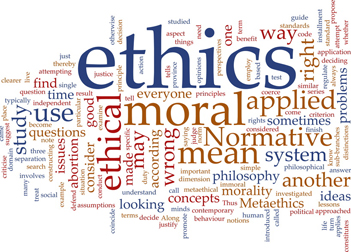
Ethics word cloud by Teodoraturovic: Creative Commons Attribution-Share Alike 4.0 International

Music by Radio Direct

Logo by Snehanshu Dharmadhikari on Unsplash

See What I'm Saying

- Posted in Radio by

enter image description here

There’s an idiom some people ask to find out if you understand them. They’ll say - “See What I’m Saying?” It’s a little odd, especially for non-native English speakers, because you can hear what someone is saying but can’t literally see they’re saying.

Very early in my radio reporting career I was sent to cover the opening of a visual art exhibit. My editor said go cover an art exhibit and we’ll put it on the radio. An art exhibit on the radio.

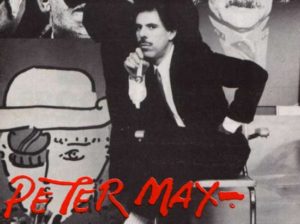
Artist Peter Max became a counter-culture icon after creating fliers for the 1967 hippie “Be-In” in New York. He made the cover of Life Magazine and appeared on The Tonight Show.

In 1986 I covered an exhibition by Max in Columbus, Ohio for WOSU-AM. Here’s that report…

(INSERT PETER MAX AUDIO)

That was a story on artist Peter Max I filed for WOSU in 1986. In the pre-digital years this story was copied a number of times so the sound quality got muddy.

Max is still alive at 88 years old. It turns out that putting visual art on the radio’s not so tough after all if you see what I’m saying.


CREDITS

Photo by Christopher Howell

Logo by Snehanshu Dharmadhikari on Unsplash

Intro/Outro Music by Radio Direct

Intro To Sonic Wheel

- Posted in Uncategorized by

I’ve been brainstorming a new media project for a while. My first thoughts were to start a podcast focusing on Ohio environmental issues. I know that once you start a podcast like that it’s going to take a lot of time and dedication to do it right. I’m pretty obsessive about doing it right.

I’m starting an audio blog to test out the concept. I’m calling it Sonic Wheel. The title is just a little descriptive but also just vague enough to be flexible. That vagueness allows me to present traditional journalism, personal storytelling or just some experimental audio art.

I’m choosing audio specifically instead of video because I still believe in the power of audio to take you on a journey. When you hear the words, you make up the pictures in your mind. I think using audio and sound is a much better way to tell a story. I’m inspired by shows like “This American Life” and “Radiolab”.

Sure, everyone has a short attention span these days and video is captivating but I’m not going to worry about that. Given my background in radio production it’s what I want to do.

I hope to publish one audio story a week. I might throw it up on Apple podcasts. I’m developing the workflow and finding efficiencies where I can. If I can keep up with that for a while, then maybe an environmental podcast is possible. I do have a lot of old radio work in my archives that I’ll re-surface for fun. Maybe I can learn to be less obsessive. Loosen up and have some fun.

I hope to be interesting. Maybe I’ll be boring but I’ll always produce original material.

So here’s to a new venture. Welcome to Sonic Wheel. Thanks for listening.


CREDITS

Logo by Snehanshu Dharmadhikari on Unsplash

Intro/Outro Music by Radio Direct